
Topics of the Week 48
From the first payout of the 13th OASI pension payment and the transformation of Zurich’s Bellevue from a wartime potato field into a Christmas wonderland, to Black Friday’s CHF 450 million discount frenzy and the unexpected comeback of FM radio, this week’s selection highlights four contrasting stories.
First payout of the 13th OASI pension payment
Spotlight
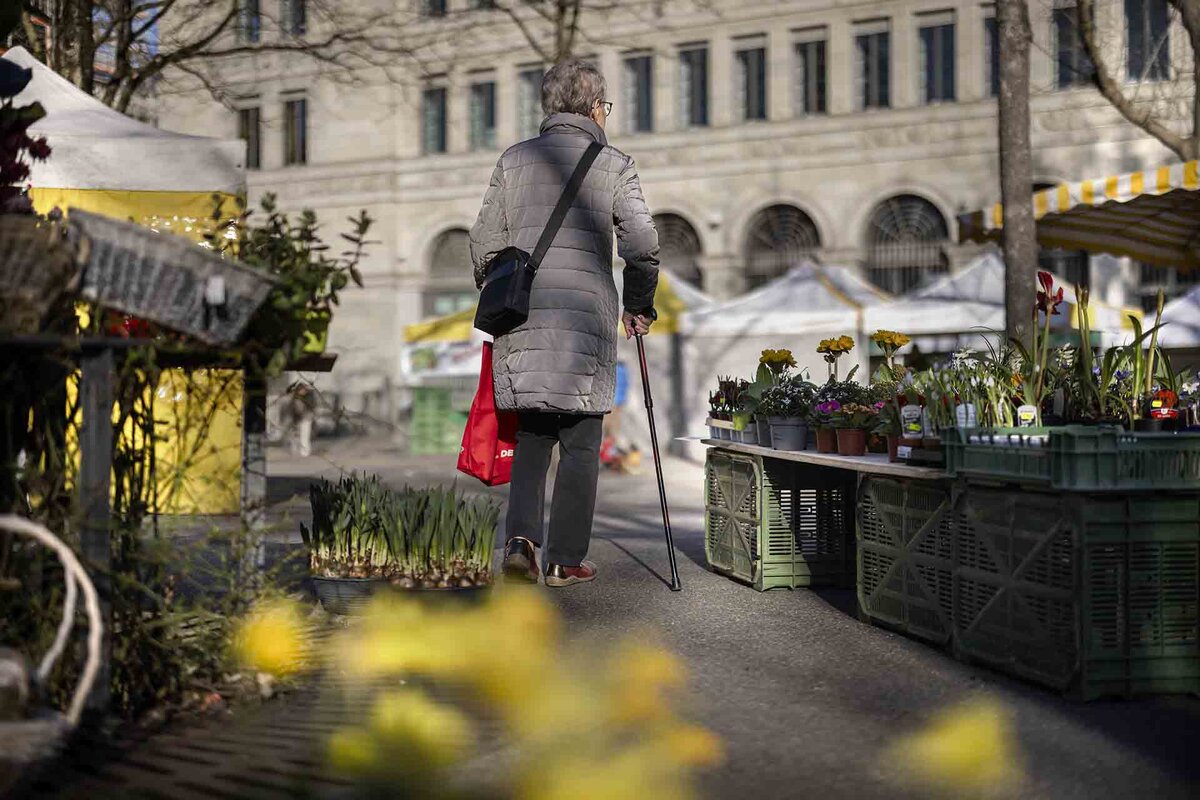
In early December 2026, roughly 2.6 million pensioners will receive a 13th Old-Age and Survivors' Insurance (OASI) pension payment in their bank accounts for the first time. Nearly three years after voters approved the measure at the ballot box, the extra monthly payout is being transferred automatically alongside the regular December pension, with no separate application required.
The supplement equals one-twelfth of the old-age pension drawn over the current year. For recipients of supplementary benefits (EL), the top-up is not counted as income, ensuring that even those in tight financial circumstances keep the full amount. An important distinction: survivors' and disability pensions remain at twelve annual payments.
For many older people, the payout noticeably offsets higher rents and rising health insurance premiums taking effect in January 2027, while also giving retailers a boost ahead of the holiday shopping season.
Politically, however, long-term financing for the additional costs—exceeding CHF 4 billion annually—remains contentious.
This Sunday, November 29, Swiss voters will decide on a temporary value-added tax (VAT) hike to help fund the OASI. Regardless of the outcome, the debate over intergenerational distribution will remain front and center heading into the 2027 election year.
From potato field to Advent wreath
Flashback
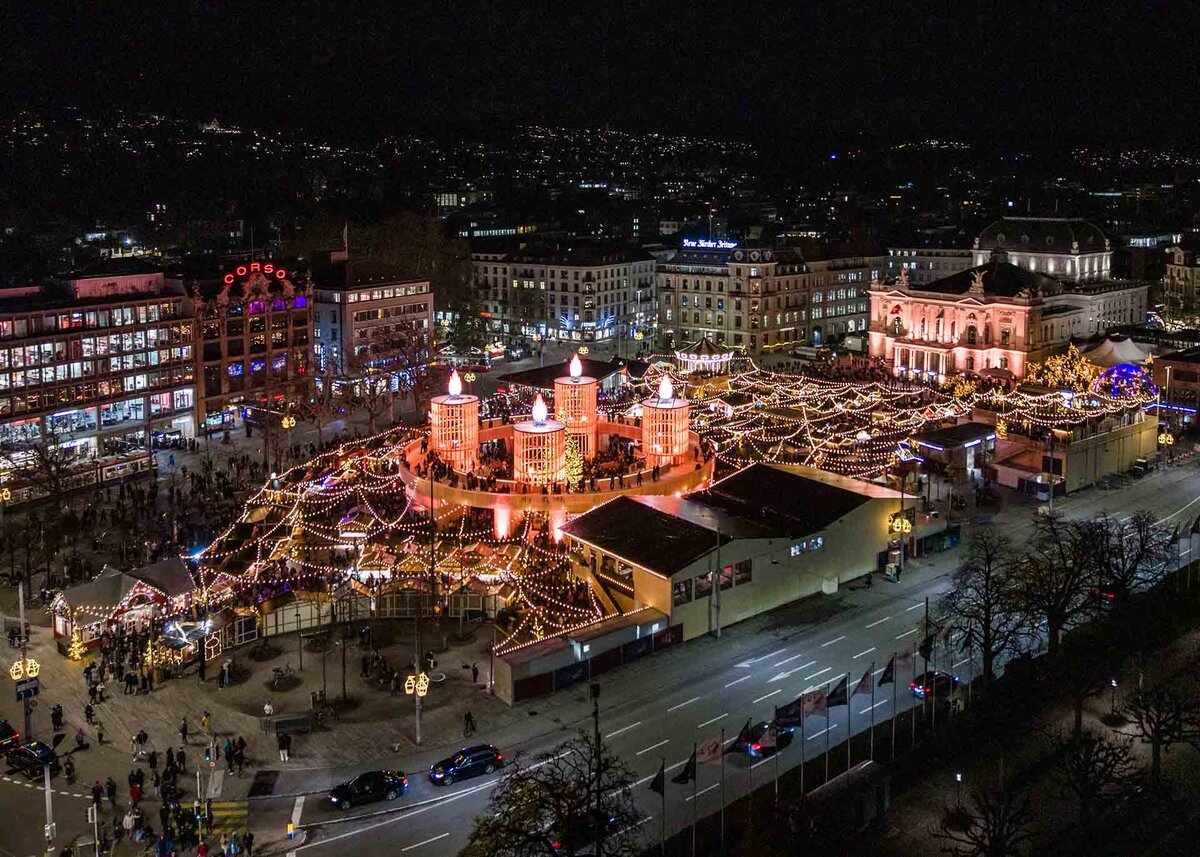
Anyone strolling across Zurich’s Sechseläutenplatz right by Bellevue these days steps into a glittering pre-Christmas world: since mid-November, the new "Bellevue Noël" Christmas market has been drawing crowds for the first time with over 100 stalls, a fondue chalet, and a walk-in Advent wreath—the quintessential image of a prosperous metropolis during Advent.
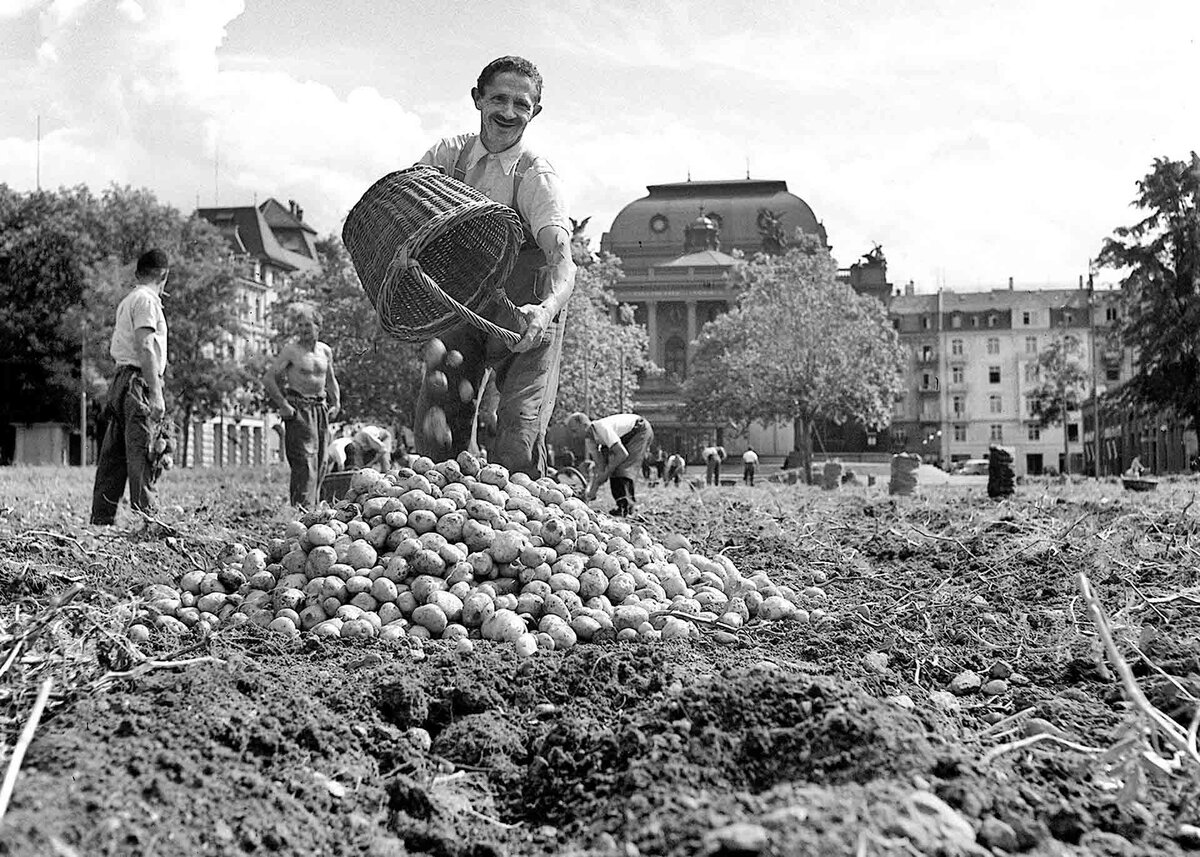
Eighty-six years ago, the exact same spot looked entirely different. In November 1940, in the middle of World War II, Switzerland was encircled by the Axis powers, imports had collapsed, and food was strictly rationed. Under the "Wahlen Plan," the Federal Council launched the so-called Anbauschlacht ("Battle for Cultivation") to secure the country's food self-sufficiency.
To achieve this, every available green space was plowed up, even in the heart of cities. On what was then the Sechseläutenwiese between Bellevue and the Opera House—where the Böögg snowman was normally burned in spring and Circus Knie set up camp—plows rolled in during November 1940. With the help of interned Polish soldiers, potatoes and rapeseed were planted on the grounds.
Where the soil at Bellevue served agricultural self-sufficiency in times of hardship in 1940, culinary indulgence and conviviality now take center stage among wooden chalets perched atop 110,000 Vals quartzite paving stones.

450
Numbers
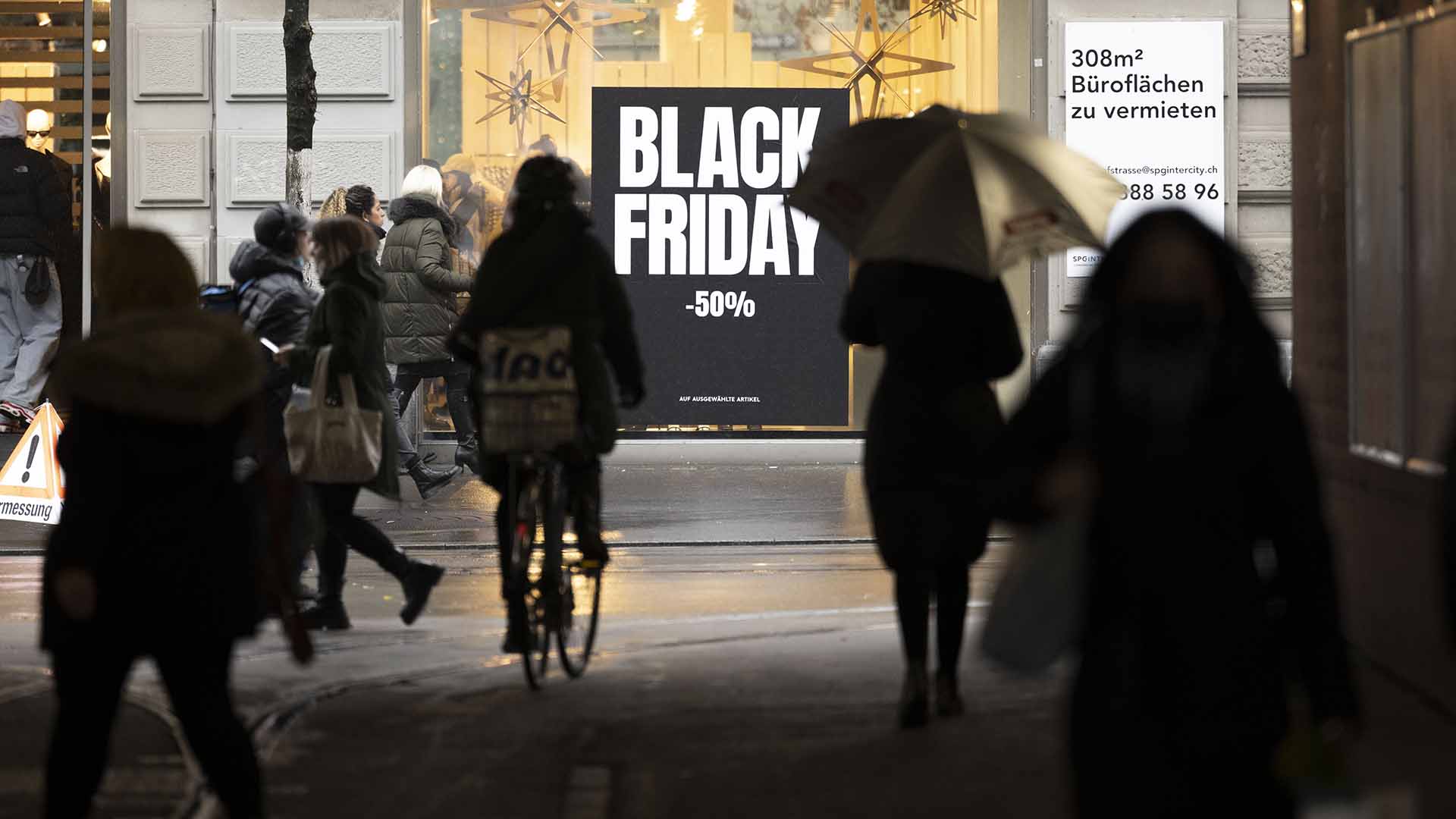
According to industry estimates, Swiss retailers generate CHF 450 million in non-food sales on Black Friday alone—roughly twice as much as on an ordinary Friday in November. Across the entire eight-day "Black Week" through Cyber Monday, spending totals around CHF 1.15 billion, with just under CHF 400 million coming from online retail.
On Friday, November 27, 2026, roughly 58 percent of the Swiss population will deliberately use the discount frenzy to shop, according to consumer surveys. On average, shoppers spend around CHF 270, while roughly 1.4 million people order their bargains directly via smartphone or computer.
While retailers advertise discounts of up to 70 percent on posters, the actual average markdown across all product categories is only 20 to 30 percent. Furthermore, data from price comparison platforms shows that for about 12 percent of promoted products, prices were first raised in the 30 days leading up to the sales event.
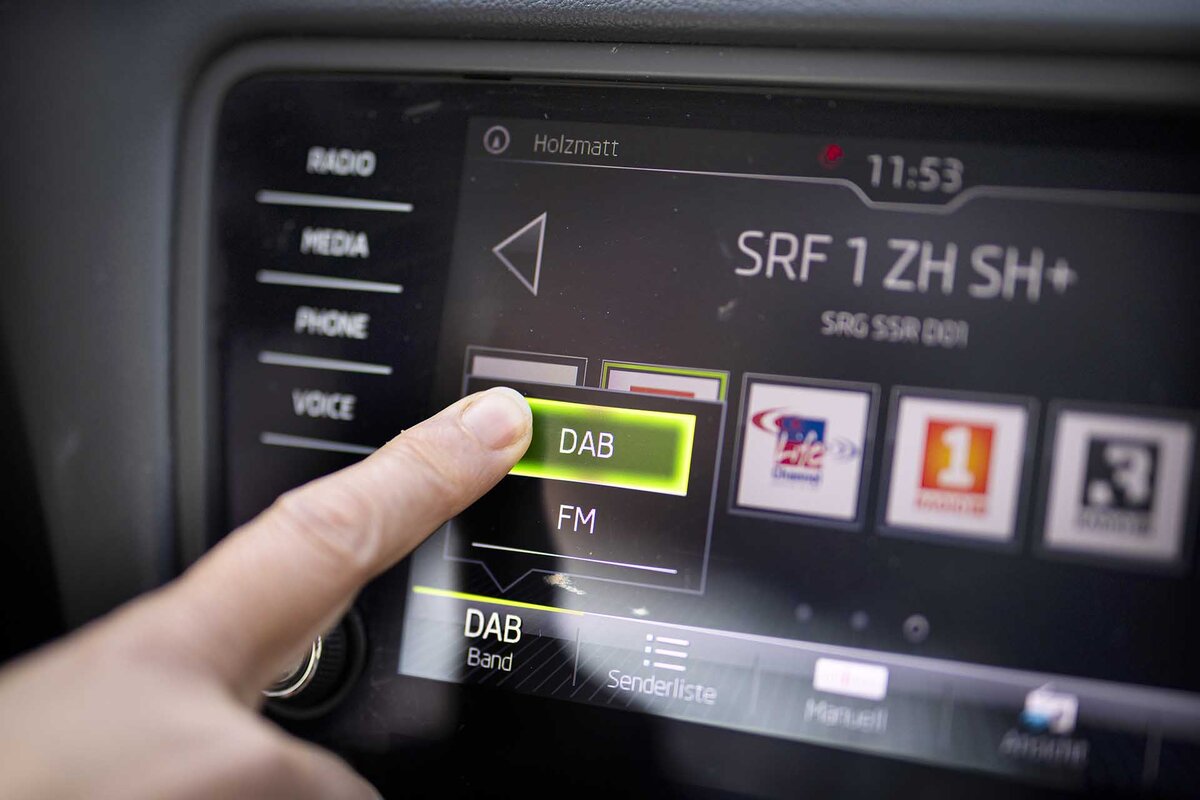
The comeback of FM radio in Switzerland
Insights
Rather than shutting down FM broadcasting at the end of December 2026 as originally planned, Switzerland will continue transmitting on the analog frequency until the end of 2031—and even the public broadcaster SRG returned to the FM band in mid-November. Just ahead of the former switch-off deadline, the industry has executed a rare U-turn in media policy.
The rethink was triggered by SRG’s unilateral exit in January 2025. After switching off its roughly 850 FM transmitters, public radio stations suffered a noticeable drop in reach. In the first half of 2025, they lost six percent of their market share—particularly among car listeners, users of older receivers, and in border regions, where audiences increasingly switched to foreign stations or domestic commercial broadcasters.
Under pressure from private radio stations, Parliament passed a motion demanding an extended FM run, prompting the Federal Council to renew broadcasting licenses by five years until the end of 2031.
This left SRG at an acute competitive disadvantage against private stations still broadcasting on FM. After receiving a legally binding license from the Federal Office of Communications (OFCOM), SRG reactivated its first sites in mid-November for its main, cultural, and regional programming, once again reaching around 80 percent of the population.
Although 85 to 90 percent of radio consumption today happens digitally via DAB+ and internet streaming, the FM comeback demonstrates that ingrained everyday habits cannot be changed simply by decreeing a cutoff date.