
Topics of the Week 27

From change in Swiss alpine tourism and the emotions at Wimbledon to the impacts of the extreme heatwave and the traditional Federal Council field trip. We accompany the topics of the week, sharpening your view of current events.
Overtourism in the mountains
In the spotlight
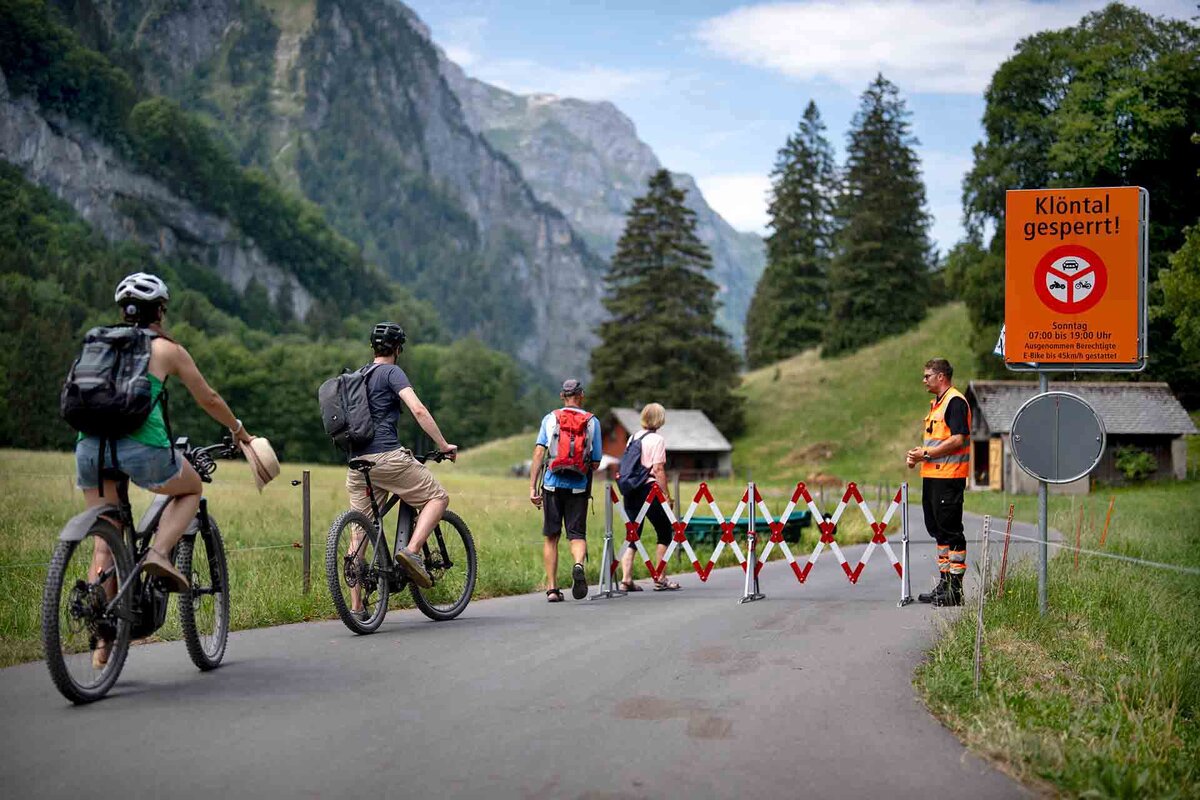
Last Sunday, Lake Klöntal in the canton of Glarus finally pulled the plug on traffic chaos. With the first "Slow Sunday" approved by the Landsgemeinde, the usual gridlock failed to materialize. Where hundreds of cars and motorcycles normally crawled around the mountain lake, illegal parkers blocking narrow streets, and emergency routes were obstructed, peace finally prevailed for hikers and cyclists on this summer Sunday.
The new regulation blocks access to Lake Klöntal for regular car traffic. Although the premiere was successful from the perspective of the authorities, it met with a mixed response in the region. While day-trippers enjoyed the silence, some restaurant and campsite operators complained about noticeable revenue losses due to the lack of day tourists.
Substantially, the Glarus pilot project has a signaling effect for all of Swiss alpine tourism. From Grisons to Ticino, destinations are analyzing the Glarus traffic regime, as many alpine recreational areas have long reached their logistical and ecological capacity limits on hot days.

A historic comeback
Flashback
Bencic celebrates, Wawrinka and Williams out: The Grand Slam tournament in London is generating contrasting Swiss headlines at the start. The focus was on Belinda Bencic, who celebrated a successful comeback on grass after her maternity leave and defeated the young British wildcard player Mika Stojsavljevic. Stan Wawrinka had less competitive luck: "Stan the Man" drew a tough opponent in grass specialist Matteo Berrettini and had to say goodbye after an intense first-round match.
The events in London were outshined by the eagerly anticipated but abruptly ended comeback of Serena Williams. At 44 years old, the American competed in the singles on Centre Court for the first time in four years. The generational duel against the 24-year-younger Australian Maya Joint turned into a three-set thriller, which Serena Williams ultimately lost 3-6 in the deciding set. Despite the bitter first-round exit, she remains in the tournament: she will play in the doubles alongside her sister Venus.

4
By the numbers
The extreme heatwave is taking a heavy toll on Switzerland: in large parts of the country, less than 40% of the usual rain fell in June. The federal government has declared drought warning level 4 (severe) for the Central Plateau and the Jura. Local severe thunderstorms provide no relief, as the parched soil cannot absorb the masses of water. In the lowlands, the first irrigation bans for agriculture are already threatening.
June 29 also marks the second-earliest glacier melting day since measurements began. All protective snow and winter reserves in the mountains have already melted; the heat is now directly attacking the thousands of years old ground ice. Currently, so much meltwater is flowing away that an Olympic swimming pool could be filled every six seconds. While this supports the levels of the Aare and Rhine in the short term, it seals the irreversible decline of our alpine glaciers.

The Federal Council field trip
Insights
This year, the traditional field trip took the national government to Vaud, the home canton of President Guy Parmelin. Acting as an economic-policy "Indiana Jones", Parmelin sent the entire body on a boat trip on the Rhone in the Aigle district. The background of the excursion: the progress of the third Rhone correction, which, at 162 kilometers, is Switzerland's largest flood protection and biodiversity project.
Historical detail: back in 1996, the Federal Council traveled along the exact same route under Jean-Pascal Delamuraz.
Aside from this forward-looking project, the focus was on the typically Swiss, flat hierarchy. At public aperitifs, the government sought unpretentious, direct contact with the population, completely without massive security barriers.