
Topics of the week 43

This week, we analyze why the Lex Koller does not solve the housing shortage. Meanwhile, in the mountains, Swiss alpine ski racers are searching for the fastest line and Swiss larches for the best winter survival strategies. We also take a look at the construction of a mega data center in Laufenburg.
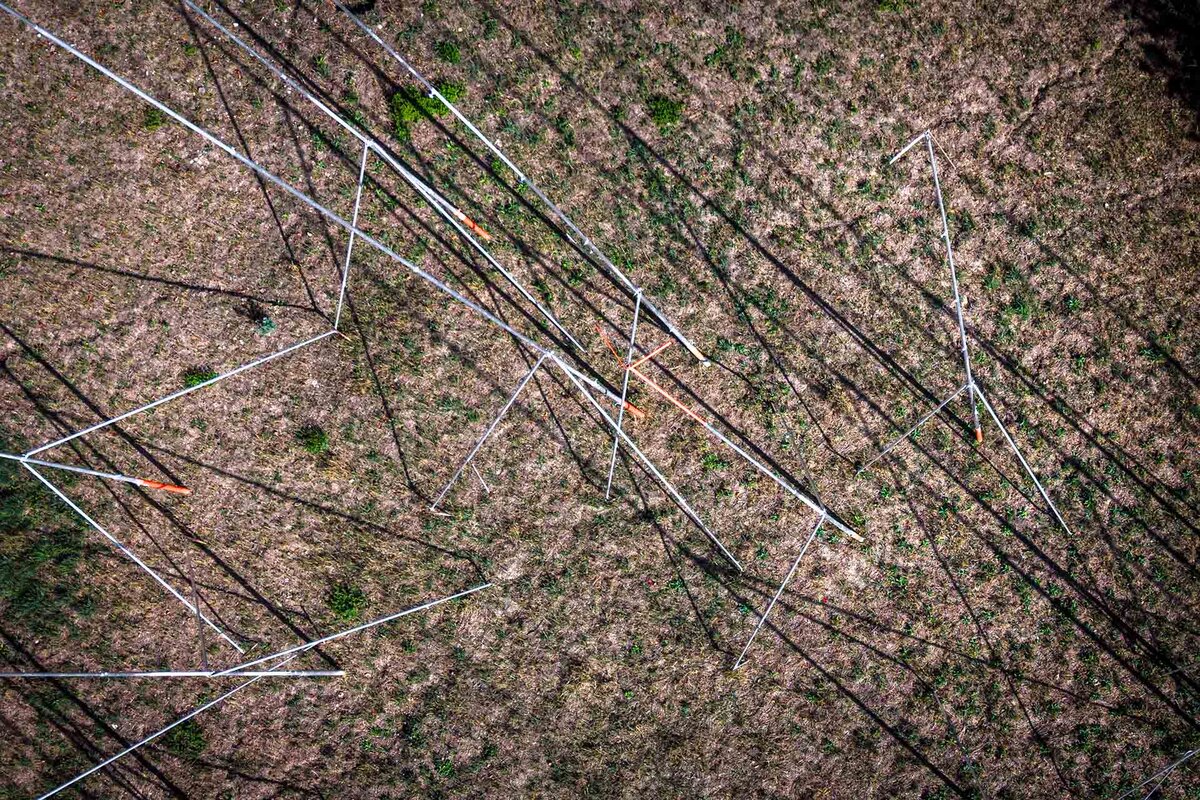
Why the Lex Koller does not lower Rents
Spotlight
In the fight against rising rents, policymakers frequently turn to tried-and-tested formulas. Left-wing parties, in particular, are calling for a strict tightening of the Lex Koller, the law that restricts the acquisition of Swiss real estate by persons abroad in order to keep foreign capital away from the domestic housing market.
Yet while the regulation governs the direct purchase of residential properties and buy-to-let real estate, experts say it misses the real core of the housing shortage. In tight rental markets from Zurich to Geneva, the restriction provides virtually no protective effect.
Independent expert reports also confirm that the law misses the reality of the housing shortage. Foreign funds continue to flow into the market through the purchase of shares in Swiss real estate funds and listed property companies. At the same time, investors are pivoting to commercial real estate. The result is persistently high land prices in urban centers, which directly translate into higher rents following refurbishments.
While proponents view the Lex Koller as an essential signal against commercialization, economists consider linking it to the rental crisis a political illusion. The law protects homeownership from direct sales abroad, but does not create a single additional square meter of living space for Swiss tenants.
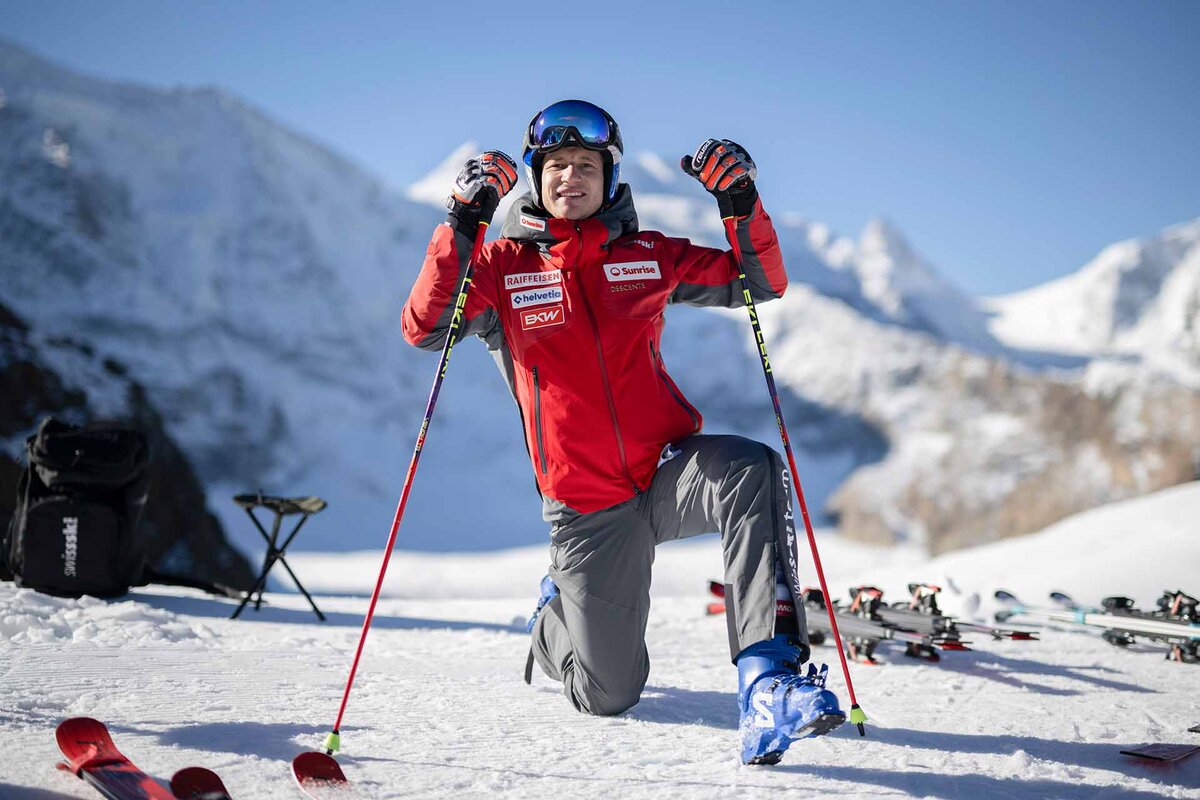
Fine-Tuning on the Engadine Glacier
Flashback
On the Diavolezza in Pontresina, Swiss alpine ski racers completed their final training sessions over the past few days ahead of the season opener. Overall World Cup champion Marco Odermatt was among the athletes alongside the Swiss-Ski alpine team, putting the finishing touches on their preparation across snow-reliable slopes for the first race kilometers of the new season.
Excellent slope conditions at an altitude of over 3,000 meters provided the Swiss-Ski team with ideal conditions for equipment testing and fine-tuning.
The training camp in the high valley of Graubünden traditionally marks the decisive phase of preparations ahead of the world elite's first showdown. Next weekend, on October 24 and 25, 2026, the first giant slalom of the winter, as has been the case since the year 2000, is scheduled on the Rettenbach Glacier in Sölden, Austria.
For the Swiss team, the goal is to translate summer form directly into their first World Cup points, as documented by Gian Ehrenzeller's photos on the Diavolezza.
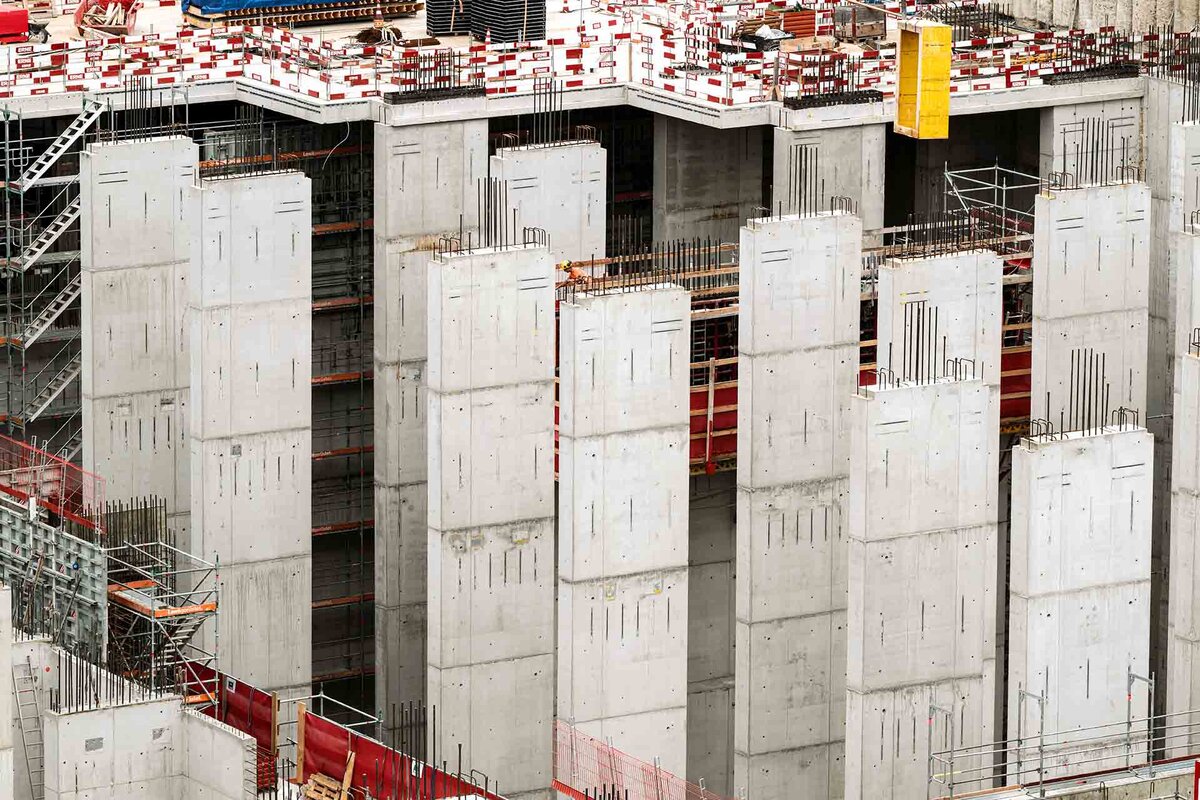
2’000
Numbers
On the 40,000-square-meter site of the historic electricity hub "Star of Laufenburg" (Stern von Laufenburg), Swiss enterprise group FlexBase is building the shell by 2028 and the entire infrastructure of its new technology center by 2032. The centerpiece is a 500-megawatt data center for artificial intelligence with a capacity for several hundred thousand high-performance processors. Plans also include the world's largest redox flow battery storage facility, with a capacity of up to 2,000 megawatt-hours.
At full capacity, the data center requires around 4.3 terawatt-hours of electricity per year. The redox flow technology selected by FlexBase relies on liquid electrolytes, withstands more than 20,000 charge cycles, and offers an operational lifespan of over 30 years with no fire risk. Connected directly to the 380-kilovolt extra-high-voltage grid, the battery secures the energy supply for the AI infrastructure while buffering peak loads across the European grid.
The photo series by Christian Beutler highlights the FlexBase Group construction site in Laufenburg, where the foundations are being laid for one of Europe's most advanced energy and data infrastructures.
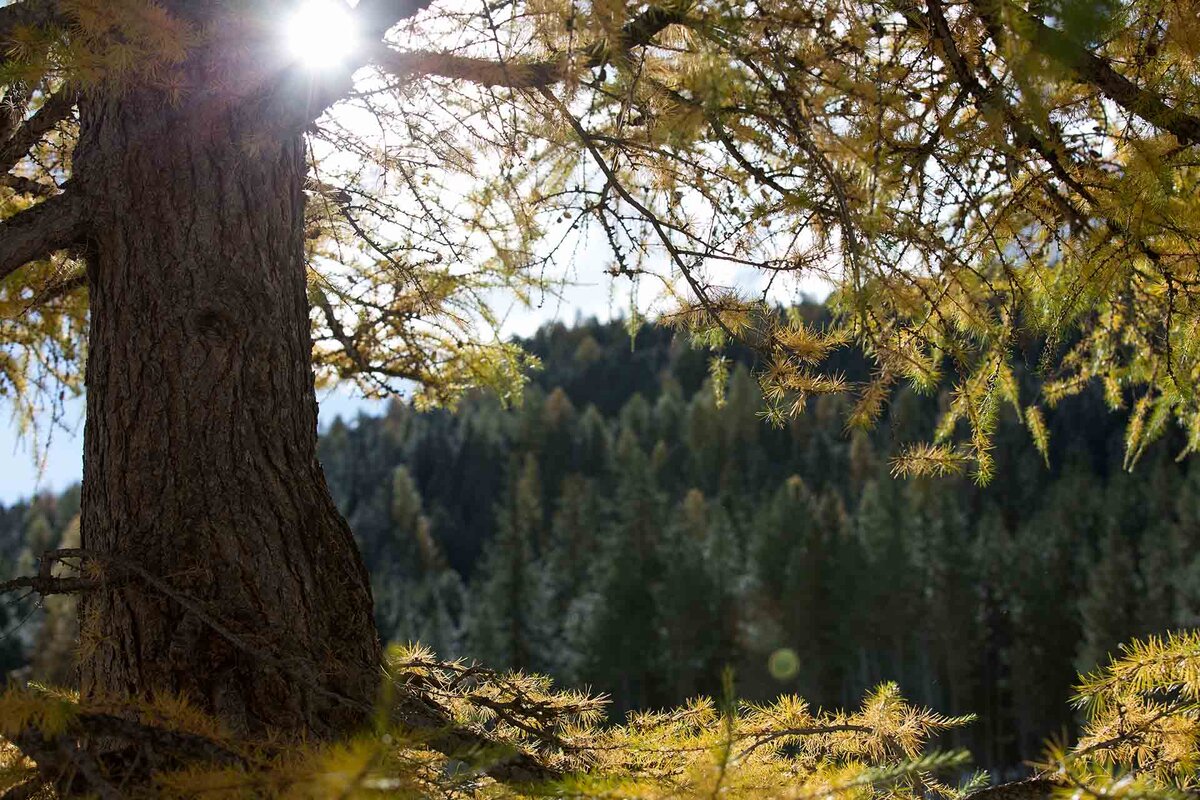
The Mystery of the Golden Larches
Insights
In late autumn, Switzerland's alpine coniferous forests undergo a striking transformation: as the only native conifer to do so, the larch sheds its entire canopy before winter. What appears in the Engadine and Valais to be a sheer spectacle of nature is, in reality, a highly efficient survival strategy.
As the days grow shorter, the tree halts photosynthesis and reabsorbs valuable chlorophyll, magnesium, and nitrogen from its needles into the trunk and roots. Only yellow-orange carotenoids remain until a layer of cork at the base of each needle triggers a controlled shedding at the slightest gust, protecting the tree from winter drought and snow damage.
The colorful transformation in the Swiss Alps also has a climatological component. As studies by ETH Zurich and data from MeteoSwiss show, the interplay of sunny autumn days and chilly nights accelerates chlorophyll breakdown, while rising summer temperatures extend the foliage season later into the year.
This autumn nutrient recycling gives the larch the vital head start needed to sprout rapidly again in the spring at extreme altitudes.